By Michelle Maloney, Broker/Owner, Maloney Real Estate · SD License #14315
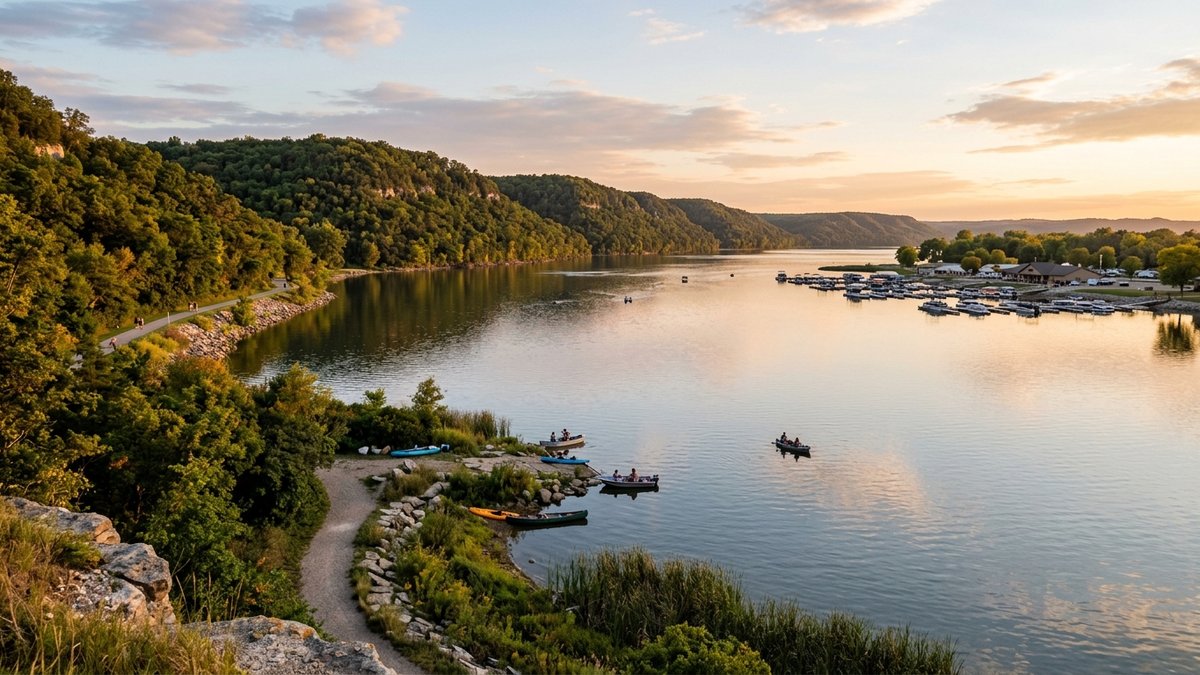
Who controls the shoreline beside this Lewis and Clark Lake home?
Start by identifying the land beneath the dock and the route you would use to reach it. A lake-area address does not answer either question. Ask for the parcel description, a survey if one is available, and the document supporting any claimed route from the home to the water. Put the location of the dock, path and shoreline improvements on the same map. You need to know which boundary each crosses before you can ask the right office about permission.
The U.S. Army Corps of Engineers’ national shoreline guidance recommends using a licensed surveyor to verify the government boundary near a proposed purchase or construction. Treat that as a reason to investigate the exact boundary, not a finding about this property. A worn footpath or mowed strip can show where people have walked. It cannot tell you whether the route is on the seller’s land, another owner’s land or publicly managed land.
South Dakota’s Register of Deeds guidance identifies the county office as a source of recorded land documents. A title company or qualified attorney can review the documents that support a claimed easement or other property right. The acreage easement checklist for buyers near Yankton can help you gather that part of the file. Keep the agency’s permission for a shoreline facility beside those documents rather than treating one as a substitute for the other.
Lewis and Clark Lake-area shopping can include properties across the South Dakota and Nebraska border. Confirm the property and facility locations before applying a state rule. South Dakota dock guidance is not an answer for a Nebraska parcel. Once the location is clear, ask the shoreline owner or administering authority which current rules govern that specific stretch, whether the advertised use is allowed there and whether this facility requires an individual authorization.
Which authorization or placement standards apply to this dock?
First ask the controlling authority whether this dock and its approach require individual authorization. South Dakota GFP’s standard dock guidance describes placement standards and permits for variances. A dock that falls under those standards may have no individual permit number or approved drawing. Have the authority identify the applicable standards, any variance and any separate shoreline approval. If authorization is required or claimed, request its number, holder, approved location and drawing, expiration information and conditions. Then compare those records with what is present. A permit for a smaller floating facility would not, by itself, answer questions about a later addition, a different placement or steps built down the bank. Each difference needs an explanation from the office that issued the approval.
Where an authorization exists, ask which structures and activities it covers. Where none is required, ask which standards govern each part of the facility. Ask the seller to identify the dock, anchoring, access path and any shore-side support improvements separately. Photographs and a simple marked plan can make the question easier for the authority to answer. Include the changes the seller knows about and ask whether additional approvals were issued. Avoid interpreting an old drawing yourself when its location or scope is unclear.
The Corps’ national FAQ explains that project-specific shoreline plans govern whether private facilities can be permitted. That national guidance does not establish eligibility for a new dock at Gavins Point or confirm an existing dock’s status. A buyer should get the local answer from the administering office for the exact location. An attractive existing dock cannot establish that another one could be built beside it or that the same facility could be enlarged.
This review has a different purpose from choosing a place to keep your boat. The private boat slip versus marina access comparison covers berth arrangements and marina questions. Here, your task is to match a physical facility to its governing standards and any required authorization. If a required document is missing, expired or describes something different, ask who can resolve that discrepancy and what evidence they need before counting the dock as a confirmed feature.
Which shoreline changes need their own review?
Ask about shoreline work separately from the dock itself. A retaining wall, added riprap, dredging, a changed bank or a permanent structure may involve a different approval question from seasonal dock placement. South Dakota Game, Fish and Parks lists shoreline-alteration activities that require review in the areas it regulates. Its guidance also explains that a state alteration approval does not remove other applicable permitting requirements. Have the responsible agencies identify what applies to the specific site and proposed work.
Request records for work already completed as well as anything you hope to change. A seller may have approval for one project and plans for another. Keep those in separate parts of the file. Ask for the approved drawing, completion records if available, and correspondence explaining a change. An invoice can help identify the contractor and work date, but the issuing authority should explain whether that work was authorized.
For your own plans, describe the action plainly. Say that you want to move a dock, repair a shore wall, add steps or clear vegetation, rather than asking broadly whether the property has lake access. The detail lets the responsible office distinguish maintenance from a change needing further review. Ask the authority what documents it needs and whether another owner or agency must also agree. Do not assume that an existing facility gives permission for your preferred replacement.
You can also ask an appropriate contractor or inspector about the visible condition of the facility. Their condition review and the agency’s authorization review answer different questions. A sound dock can still have an unresolved approval issue, while an authorized dock can need repair. Keep condition, permission and future plans visible as separate items. That makes it easier to identify whether a concern is about upkeep, a missing record or a use that still needs an official answer.
What changes when you become the owner?
Where individual authorization is required, have the issuing authority explain the next-owner process before assuming the seller’s paperwork will cover you. Where none is required, confirm the standards the next owner must follow and whether any variance or separate approval needs attention. Ask whether the authorization stays in effect, requires notice, needs a new application or involves another step. Request the answer for that authorization and location. The house purchase, a recorded access right and a shoreline permission can have different paperwork. Your title professional should review property rights, while the agency explains its own approval requirements.
Ask about ongoing responsibilities at the same time. The authorization or applicable rules may address placement, maintenance, seasonal removal, inspections or restrictions on changing the facility. South Dakota GFP publishes dock standards and identifies staff who can answer questions about their application. Ask which standards govern this dock and whether any variance or other approval is part of its record. Avoid relying on a neighbor’s routine as the answer for your property.
Public access deserves a clear question too. GFP’s dock guidance says placement cannot block public access where the water or shoreline is public. Ask the administering authority to explain the public and private boundaries at this site. Then ask what you can maintain, where people may pass and whether the existing approach has any conditions. A fence, sign or path in a photograph is a feature to verify, not evidence of exclusive shoreline control.
The guide to lake homes without deeded access helps with the broader question of how a near-lake home fits your plans. For a home advertising its own dock, focus on the responsibilities you would take over and the steps required to keep the claimed use. Write down the authority’s response, its date and the document it refers to. Take unresolved timing questions to your real estate professional and the qualified professionals handling the purchase.
Build a permit-to-site record before valuing the feature
Use a short record that connects each claimed feature with its supporting document and the person who can confirm it. Start with the exact listing claim. Then record the dock’s location and the authority’s answer about whether individual authorization is required. If required, add the authorization number, issuing office and dated drawing. If not, record the applicable standards and any variance or separate approval instead. Add the survey or boundary question, the approach route and any shore-side improvements. You are checking whether the paperwork and the site describe the same arrangement.
Give each item a clear status: confirmed by the appropriate authority, awaiting a document or awaiting professional review. Include who supplied the answer and what remains open. If the seller provides a permit but no drawing, identify that specific gap. If the drawing shows an approach that differs from the route you walked, send that question to the responsible office and survey or title professional. A focused question is more useful than a general request to confirm lake access.
Before treating the dock as a supported part of your decision, gather answers to these questions:
- Which owner or agency controls the shoreline at this location?
- Does each facility require individual authorization, and what approval or placement standards apply?
- Does the facility and route match the applicable standards and any approved location?
- Who must confirm the next-owner steps and continuing responsibilities?
- Which repair or alteration plans still need separate review?
Your real estate professional can help organize the questions and coordinate the documents. The issuing authority, surveyor and title professional provide the answers within their roles. Keep a dock with unresolved records marked as unresolved while that work proceeds. When the records match the site and the next-owner process is clear, you can assess the feature using the arrangement that has been confirmed.
Frequently Asked Questions
Does an existing dock prove that it is authorized?
First ask the controlling authority whether individual authorization is required. If it is, request the approval and drawing. If not, confirm the applicable placement standards and any variance or separate shoreline approval.
Does a dock permit establish ownership of the shoreline?
Review ownership and access documents separately from the agency's permission. A surveyor can verify the boundary, and a title professional can review claimed property rights.
Can South Dakota dock guidance be used for a Nebraska property?
Confirm the facility's location and the responsible authority first. South Dakota guidance should not be applied as the controlling rule for a Nebraska parcel.
Does buying the home automatically transfer its dock authorization?
Where authorization is required, ask the issuer about its next-owner process. Otherwise, confirm the applicable standards and whether any variance or separate approval needs attention.
Who should answer questions about planned shoreline repairs?
Describe the proposed work to the responsible shoreline authority and ask which approvals apply. A contractor's condition assessment does not replace that review.
Buyer Guides
Buy a Home in Yankton
The buyer service page for search help, offer strategy, and local guidance.
Open guideBuyer Guides
Yankton Buyer Guide
Step-by-step education for financing, inspections, offers, and closing.
Open guideBuyer Guides
Homes for Sale
Current inventory plus local search context by property type and area.
Open guide
About the Author
Michelle Maloney is the Broker/Owner of Maloney Real Estate in Yankton, South Dakota. She helps buyers and sellers understand the local market, compare their options, and make confident real estate decisions across Yankton and southeast South Dakota.
Sources
South Dakota GFP: Docks and Boat Lifts, South Dakota GFP: Shoreline Alterations, USACE: Shoreline Management FAQ, South Dakota DOR: Register of Deeds.
Questions About the Yankton Market?
Ask Michelle's team about pricing, neighborhoods, timing, or your next move. No pitch, no pressure.