By Michelle Maloney, Broker/Owner, Maloney Real Estate · SD License #14315
How does the tree-covered yard fit your daily plans?
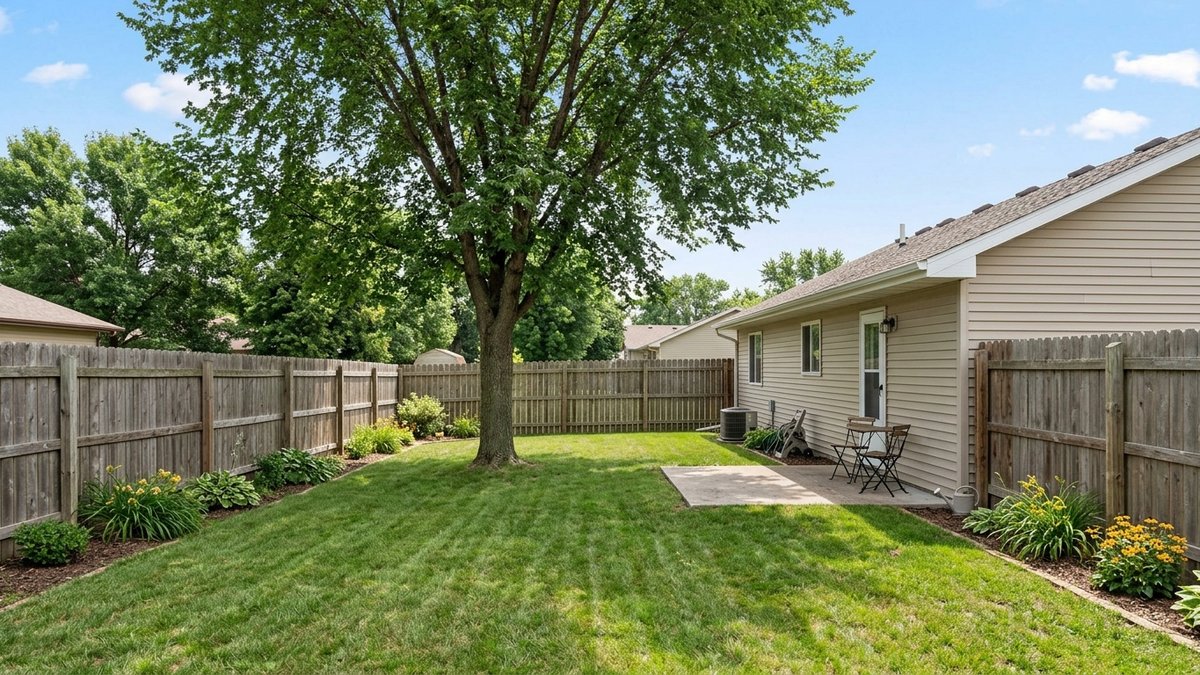
Start with what you want to do outside. For a Yankton home, compare the shaded places you would use with the open space your routine needs. A yard can look generous in listing photos and still put your preferred sitting area, garden or walking route somewhere awkward.
Give each planned use a place on a simple sketch. Mark where you would put a table, where you would walk from the house and which area you want to leave open. You are organizing your questions, not drawing a construction plan. Keep a proposed change clearly separate from the yard as it exists.
The International Society of Arboriculture explains that deciduous shade trees can cool homes in summer and allow winter sun after they lose their leaves. That is a useful reason to notice canopy placement. It does not establish this home’s energy savings or tell you how much shade your patio gets at a particular hour.
Ask whether you can revisit the property at a useful time, with permission. Look from the rooms you expect to use and from the outdoor space itself. A photograph taken in one season cannot answer every question about the view or your experience of the yard.
Compare your finalists using the same intended routine. If one home has a shaded patio and another has a larger open lawn, write down which arrangement you prefer and why. Avoid giving both properties the same generic label of a nice backyard.
Keep the wider search in perspective. The in-town and rural home comparison can help you think about the property setting. Within either setting, your tree and yard comparison should concern the actual layout you would live with.
Which tree and root questions need professional review?
Ask a qualified arborist about the trees that matter to your choice. A buyer’s observation is a starting point for that conversation. It cannot establish a tree’s condition, identify every species or show how a proposed project would affect it.
Point out the trees beside your intended outdoor area, house, driveway and walking route. Tell the arborist what you hope to keep and what you are considering changing. Ask which questions can be answered during the visit and which need another service or further information.
University of Wisconsin Extension explains that surface roots can make mowing difficult and create tripping concerns. Its August 2026 guidance also warns that cutting roots or damaging them with a mower can harm a tree. Treat visible roots as a reason to discuss the actual situation, rather than assuming you can remove them to create a smoother lawn.
Ask how a tree could be retained alongside the use you want. Would a different placement for your sitting area help? What needs review before any grading, digging or paving proposal is developed? Have the professional explain the options without trying an alteration during a showing.
Your house inspection and tree evaluation should have clear scopes. The South Dakota home inspection guide can help you prepare the broader conversation. Confirm whether your inspector evaluates trees at all and what any tree-related observation means.
ISA describes arborists as trained tree-care professionals and warns that large-tree pruning and removal can be dangerous work. Ask about relevant qualifications and the service being offered. A credential or an attractive canopy does not replace an assessment of the specific tree, and an assessment should explain its limits.
What should Yankton buyers ask about boulevard and ash trees?
Keep city questions separate from private-yard preferences. For an in-town Yankton home, ask where the trees sit in relation to the property and any public right-of-way. Confirm the applicable responsibilities with the city before relying on an assumption that every nearby tree is yours to change.
The City of Yankton’s Tree Trimming page publishes street and sidewalk clearance guidance. Bring the actual address and the tree location to Code Enforcement if clearance is a question. Ask what applies and who should address it. A buyer’s visual estimate is not a determination that the property meets the city’s requirements.
Ash trees deserve a records conversation when their identity is confirmed. Yankton’s Emerald Ash Borer Mitigation Plan, updated in 2025, distinguishes street and private-property ash questions and discusses treatment documentation. Ask the seller for available care records, then have the appropriate professional explain what those records establish about the actual tree.
The plan connects some measures to an official local infestation announcement. Confirm the current city position directly before placing a deadline, treatment obligation or removal assumption into your home comparison. A historical plan alone cannot tell you that a particular trigger has occurred.
South Dakota’s Department of Agriculture and Natural Resources maintains emerald ash borer information and landowner guidance. Use those resources to prepare informed questions. They do not identify the species or condition of a tree at your prospective home, and a general state page cannot settle an address-specific question.
For a rural property with a Yankton mailing address, confirm the jurisdiction first. Keep notes showing which office answered and what remains open. If boulevard planting or replacement is part of your plan, ask the city about the current process before treating a future tree as an available feature.
How should you compare care plans and proposed yard changes?
Compare the yard you can use now with the changes you are proposing. A plan that depends on removing a tree, moving a path or changing ground levels needs its own professional review. Keep those proposals visible in your comparison so they do not quietly become assumed features of the home.
Ask the seller for the tree-care information they have. A useful request identifies the tree and the work, rather than asking whether the yard has been maintained. If a record concerns a different tree or an older service, label it clearly and let the professional explain its relevance.
When work is suggested, request a written scope and an actual price from the provider. Ask what the proposal includes, what is excluded and what access is needed. Keep an assessment fee separate from a quote for later work. There is no reliable universal removal or maintenance number to substitute for the specific proposal.
You can compare options without deciding how the work should be performed. For example, ask the arborist to explain retaining a tree alongside your planned use before you count removal as the only possibility. Discuss a proposed project with the appropriate professional and local office, where applicable.
The drainage questions for buyers near Yankton address a separate property concern. Keep drainage findings identified as their own work rather than assuming a tree-care proposal answers them.
Consider the care arrangement you would accept. Would you arrange professional visits when recommended, or does your search depend on avoiding that responsibility? Write down the answer honestly. A yard that fits another buyer’s plans may ask more of you than you want, even when the trees are a feature you appreciate.
Build a comparison that keeps the unanswered questions visible
Use one page for each finalist and keep the same categories. Record the outdoor area you would use, the trees you want to retain, professional questions, seller records and any city confirmation still needed. This makes the trade-off easier to discuss than a broad judgment that one yard is better.
Separate what you saw from what you were told. A seller-described treatment belongs with the requested record. An arborist’s written finding belongs with the actual tree it concerns. Your preference for more sun belongs with your intended routine. These entries answer different questions and should remain distinguishable.
For a shaded-yard finalist, note the place you would sit, the open area you still have and the tree questions that matter to that arrangement. For an open-yard finalist, record whether you are satisfied with it as it stands or whether your preference depends on future planting. Treat hypothetical improvements consistently for both homes.
Then list the next action beside each unresolved point. It might be an arborist visit, a seller-record request or a conversation with the city about a boulevard tree. Ask who will arrange access and when an answer can reasonably be obtained. Keep the purchase-process timing conversation with your agent and the relevant professionals.
Read a proposal against your original question. If you asked whether a tree can remain beside a planned patio, a general maintenance estimate may leave that question open. Request clarification before using the estimate to compare homes.
Bring the comparison and outstanding questions to your agent. Explain which parts of the yard you need from the start and which changes you would consider later. For your Yankton home search, the useful next step is a property-specific answer about the trees and the outdoor space you intend to use.
Frequently Asked Questions
Does a larger canopy mean the yard will suit my plans?
Compare the actual shaded and open areas with your intended use. Ask about the trees that affect those plans, rather than relying on canopy size alone.
Can I assume surface roots can be cut to improve the lawn?
Ask an arborist about the specific situation. University of Wisconsin Extension warns that root cutting and mower damage can harm a tree.
Should my home inspector answer every tree question?
Confirm the inspection scope. Ask which tree questions require a qualified arborist's service and what limitations remain after each evaluation.
How should I check an ash tree's treatment history?
Request available records identifying the tree and work. Ask the appropriate tree professional and city office to explain their relevance and any current address-specific questions.
Does a Yankton mailing address establish city tree responsibilities?
Confirm the parcel's jurisdiction and tree location with the appropriate office before relying on city guidance for a rural property.
Buyer Guides
Buy a Home in Yankton
The buyer service page for search help, offer strategy, and local guidance.
Open guideBuyer Guides
Yankton Buyer Guide
Step-by-step education for financing, inspections, offers, and closing.
Open guideBuyer Guides
Homes for Sale
Current inventory plus local search context by property type and area.
Open guide
About the Author
Michelle Maloney is the Broker/Owner of Maloney Real Estate in Yankton, South Dakota. She helps buyers and sellers understand the local market, compare their options, and make confident real estate decisions across Yankton and southeast South Dakota.
Sources
City of Yankton: Tree Trimming (checked October 13, 2026), City of Yankton: Emerald Ash Borer Mitigation Plan, updated 2025 (checked October 13, 2026), University of Wisconsin Extension: How to Deal with Surface Tree Roots, August 2026 (checked October 13, 2026), International Society of Arboriculture: Benefits of Trees (checked October 13, 2026), International Society of Arboriculture: Why Hire an Arborist? (checked October 13, 2026), South Dakota DANR: Emerald Ash Borer information (checked October 13, 2026).
Questions About the Yankton Market?
Ask Michelle's team about pricing, neighborhoods, timing, or your next move. No pitch, no pressure.