By Michelle Maloney, Broker/Owner, Maloney Real Estate · SD License #14315
What should you review before making an offer on acreage with a private well?
Start by asking what documentation exists for the well and how recently the system has been evaluated. A private well is part of the property, but it is also its own water system. The useful question is not whether the home has a well. It is whether the buyer can build a clear picture of that particular well before relying on it.
Ask the seller for available water-test results, service or repair records, treatment-equipment information, and any well completion report or well log. Ask when the pump, pressure equipment, filtration, softener, or other treatment equipment was installed or serviced if that information is available. A seller may not have every record, especially for an older acreage. Missing paperwork does not prove there is a problem. It does tell you where to slow down and ask more property-specific questions.
Put these requests on the same timeline as your other property review. Keep the report, test date, equipment notes, and unanswered questions together so the information is easy to compare later. If a document describes an item you cannot identify at the showing, ask for clarification rather than assuming it has been replaced or removed. When a seller has had the property for only a short time, older records may be limited. That makes a current, address-specific review more useful, not less.
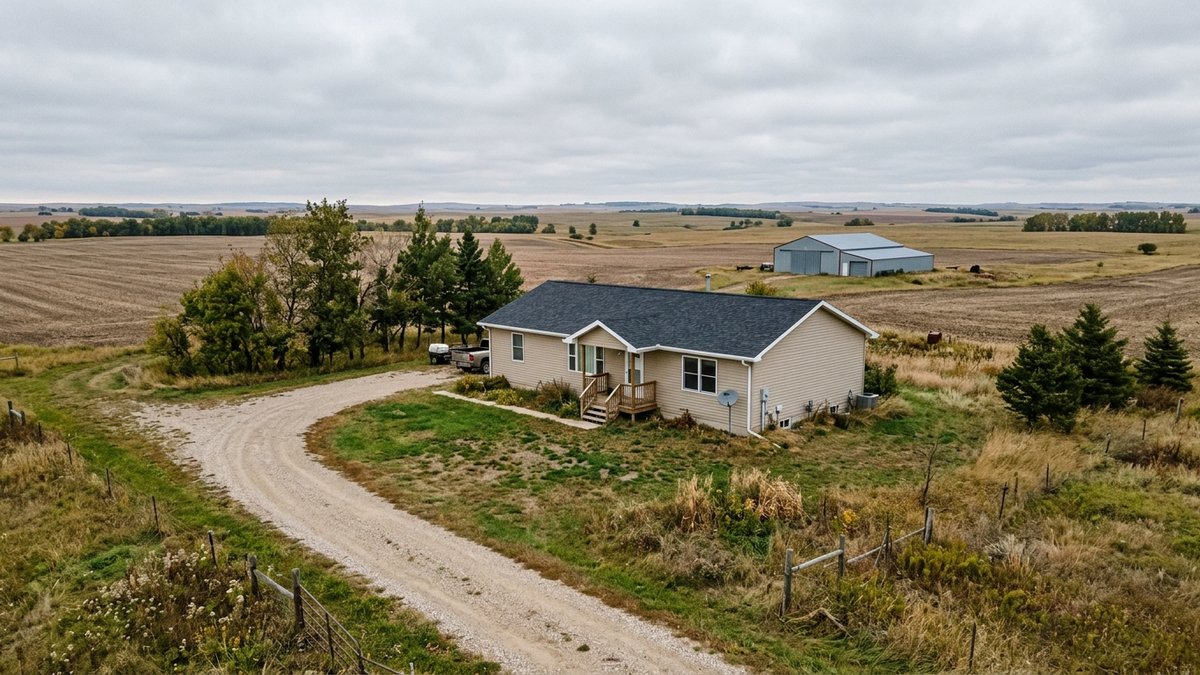
This is also a good time to separate the well from the rest of the acreage decision. A property can have the land, outbuildings, and setting a buyer wants while still needing closer review of its water system. If you are comparing acreages for sale near Yankton, keep a separate notes page for each well instead of relying on memory after several showings.
How can a South Dakota well completion report help a buyer?
A South Dakota Water Well Completion Report can give a buyer a starting point for questions about the well’s history and construction. The state database can be searched using details such as the legal description, county, or the name or business connected to the well when it was drilled. That is especially helpful when an acreage has changed hands more than once.
The current South Dakota completion-report form includes fields for location, completion date, depth and formation information, casing, well-test data, grouting, screens, and nearby potential pollution sources. Those fields are not a current-condition guarantee. They help you compare the records with what is at the property today and identify topics for a qualified professional to review.
Older properties need an extra measure of patience. South Dakota notes that some older wells may not have a completion report in the database, and SDSU Extension explains that reports were not required before 1975. If a search comes up empty, use the legal description, county, and any prior-owner information you have, then discuss the next step with the professionals involved in your purchase. Do not treat an absent database result as a clean bill of health or an automatic reason to walk away.
Which well and equipment questions matter during a showing?
Ask where the well is located and what equipment is visible or documented. Buyers should understand the difference between a well itself and the parts that move water into the home. A pump, pressure equipment, electrical components, piping, treatment equipment, and the wellhead all create questions that are specific to the property.
Keep the questions practical. What is known about the well’s age? Is the pump age documented? Is there water treatment equipment, and are there service records? Has the seller identified prior repairs, periods of low pressure, or changes in water quality? If answers are uncertain, write down the uncertainty instead of filling in the gap with an assumption. A local well professional can help assess the system’s current condition and explain what further review is appropriate.
The same approach works for the land around the well. Note the location of septic components, livestock areas, fuel storage, drainage paths, and any older structures or abandoned wells that need follow-up. These are not details to diagnose at a showing. They are reasons to ask focused questions before the property becomes your responsibility.
How should you approach water testing for a private well?
Use current, property-specific testing rather than a general assumption about rural water. The South Dakota Department of Health provides private-person testing kits and describes laboratory services that include organic, inorganic, microbiology, and radiochemistry testing. The appropriate scope depends on the property, the water use, the available history, and advice from the laboratory or qualified professional.
A prior test can be useful context, but it is a record of the water at the time of that sample. Ask for the date, the laboratory, and the result details. If the property has treatment equipment, ask what problem the equipment was intended to address and whether there are service records. That creates a more useful conversation than assuming a filter or softener solves every issue.
South Dakota requires a water sample for each new domestic well drilled, but that requirement does not tell a buyer how an older well is performing today. For any acreage you are considering, confirm the testing plan and timing for that address with the people who will evaluate it. The goal is a clear decision based on current information, not a broad promise about every private well in southeast South Dakota.
What local property context should you compare around Yankton?
Acreages near Yankton can vary in lot size, building placement, drainage, outbuildings, and access. That is why the well questions should travel with the property rather than becoming a generic checklist. The same record search may produce a different set of follow-up questions for two homes that look similar online.
Compare the well location with the layout you can see and the information supplied for the property. Ask for clarification about the relationship between the well, septic components, treatment equipment, and places where water runs after heavy rain. If the property has evidence of past flooding or the well may have been affected by flooding, SDSU Extension advises addressing assessment, repair, disinfection, and sampling with the appropriate professionals. Do not assume that every rural acreage has that history.
If the acreage search is still broad, use the buyer guide and the homes for sale in Yankton search tools to narrow the property type and location first. Then give the well the same attention you give the home’s condition, access, and daily fit.
Private well due-diligence checklist for acreage buyers
Use this short checklist to keep the conversation organized before you make a decision:
- Get the legal description and search for an available South Dakota well completion report.
- Request available water-test, treatment, service, repair, and well records from the seller.
- Ask what is known about the well, pump, pressure equipment, electrical components, and visible treatment equipment.
- Compare the well location with the property’s septic components, drainage, livestock areas, fuel storage, and any possible abandoned wells.
- Ask a qualified well professional what current-condition review makes sense for the specific system.
- Ask an approved or certified laboratory which testing is appropriate for the property and planned water use.
- Keep copies of the records and questions with the rest of your acreage due-diligence notes.
This process will not turn a private well into a simple yes-or-no feature. It will help you decide whether the available information supports your next step, whether you need more review, and how the well fits the acreage you are considering. If you want help organizing the property questions while you search, contact Michelle to talk through the real estate side of your acreage plan.
Frequently Asked Questions
Can I find a South Dakota well completion report online?
South Dakota's Water Rights program provides a Water Well Completion Reports database. Search tools can use details such as legal description, county, or the name or business associated with the well when it was drilled. Older wells may not have a report in the database.
Does a well completion report show whether the water is safe today?
No. A completion report can provide historical construction and location details, but it is not a current water-quality or system-condition result. Ask the appropriate laboratory and well professional about current property-specific review.
What records should I ask for when buying acreage with a private well?
Ask for available well completion, water-test, treatment, service, repair, and equipment records. Then compare them with the property's current condition and discuss gaps with qualified professionals.
Are private wells common around Yankton?
Some acreage properties near Yankton use private wells, while other properties may have different water arrangements. Confirm the specific water source, records, and current review needs for each address you consider.
Buyer Guides
Buy a Home in Yankton
The buyer service page for search help, offer strategy, and local guidance.
Open guideBuyer Guides
Yankton Buyer Guide
Step-by-step education for financing, inspections, offers, and closing.
Open guideBuyer Guides
Homes for Sale
Current inventory plus local search context by property type and area.
Open guide
About the Author
Michelle Maloney is the Broker/Owner of Maloney Real Estate in Yankton, South Dakota. She helps buyers and sellers understand the local market, compare their options, and make confident real estate decisions across Yankton and southeast South Dakota.
Sources
South Dakota DANR Water Well Completion Reports, South Dakota DANR Drilling a Well, South Dakota Department of Health Environmental Testing, SDSU Extension Finding Private Well Completion Reports, SDSU Extension Restoring and Sampling Private Wells.
Questions About the Yankton Market?
Ask Michelle's team about pricing, neighborhoods, timing, or your next move. No pitch, no pressure.