By Michelle Maloney, Broker/Owner, Maloney Real Estate · SD License #14315
Which dryer setup is already in the Yankton home?
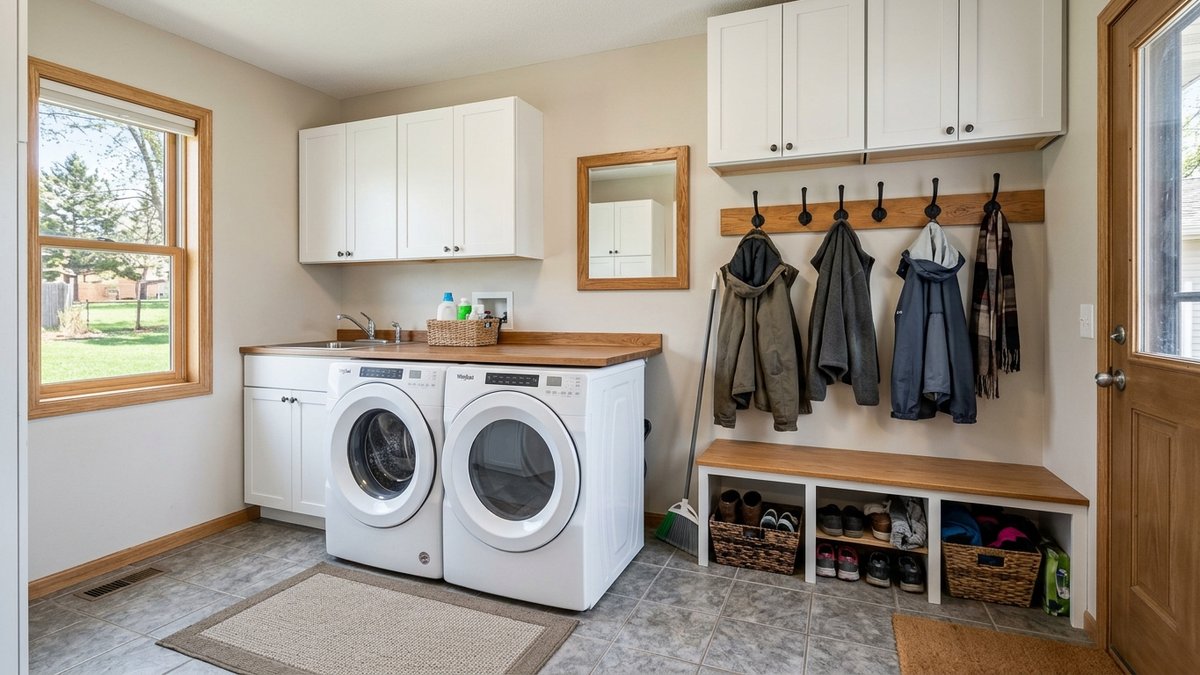
Start with the model that is installed and the equipment you plan to use. Record whether the dryer is gas or electric, whether it has an exterior exhaust connection, and its model number if accessible. A photo of a washer and dryer tells you where the appliances sit. It does not tell you whether your own dryer can use the same connections.
Ask whether the installed appliances are part of the sale, then have your agent clarify the equipment described in the transaction documents. Keep that question separate from condition. A dryer may be included while its installation still needs review. If the seller plans to take it, the connection and space questions matter even more because you will be supplying the next machine.
Locate the manufacturer’s installation instructions for the exact model. Use them to frame questions about connections, clearances, venting or drainage, and service access. The useful comparison is between those instructions and the actual home. An installer can explain any mismatch. Do not assume that every electric dryer uses the same connection or that a machine with a similar appearance is a direct replacement.
For a Yankton buyer, this is a small part of making the house ready for ordinary use after the move. Keep the equipment plan with the other questions in your homebuying preparation. Write down which machine you expect to keep, bring, or purchase. That gives the inspector and installer a specific question to answer, instead of asking whether the laundry room generally looks fine.
Where does a conventional dryer’s exhaust go?
For a conventional vented dryer, confirm the route from the appliance to the exterior and ask a qualified professional about its condition. Look only at accessible areas during a showing. Note a visible crushed connector, loose section, lint accumulation, or an outdoor cover you cannot identify. Leave moving equipment, opening walls, and taking connections apart to the appropriate professional.
The U.S. Fire Administration advises checking the venting behind a dryer for damage, crushing, or restriction. Its guidance also calls for the outside vent covering to open during operation. These are useful questions for an inspection or service visit. They are not a reason to operate an unfamiliar appliance without the seller’s permission or to certify a concealed route from a brief look.
Ask about cleaning access as well as the current appearance. Where can someone reach the connector? How is the exhaust route cleaned? Are there available cleaning or service records? A tidy laundry room and an empty lint screen are encouraging housekeeping details, but neither answers what is inside the rest of the exhaust path.
The Consumer Product Safety Commission explains that lint can block airflow and contribute to excessive heat. It also identifies clothes staying damp or drying taking longer than usual as possible signs of a blocked filter or exhaust duct. Ask about those symptoms without treating them as a diagnosis. Different problems can require different follow-up.
Record the observable concern and the question that remains. For example, ‘exterior outlet not identified’ is more useful than ‘vent looks questionable.’ That allows a professional to address the route and access rather than leaving you with an untested assumption.
What changes with a heat-pump dryer?
A heat-pump dryer changes the moisture question because it does not exhaust drying air through an exterior vent. ENERGY STAR describes a closed-loop system that removes moisture through a condenser. The resulting water drains away or collects in a tank that is emptied. Confirm which arrangement the actual machine uses.
That distinction matters when a home has a laundry location without an obvious exterior vent. The absence of a vent does not by itself identify a defect if the installed machine is designed to operate without one. It also does not prove that a conventional dryer you own can be installed there. First identify the equipment, then evaluate the connection plan that goes with it.
Ask where condensate goes, what routine the model requires, and whether the drain connection or collection tank is accessible. ENERGY STAR notes that some manufacturers offer arrangements that use a clothes washer drain. Check the instructions for the exact equipment rather than assuming any nearby drain is suitable. An appliance installer or plumber can address a proposed connection.
Compare the model’s capacity and cycle information with your own use before treating a heat-pump machine as an automatic substitute. If you are considering a purchase, read current manufacturer specifications and get an installation assessment for that home. A national product description does not establish the cost, work, or convenience of changing the equipment at a particular address.
Keep the two installation paths separate in your notes. One home may have a conventional exhaust route that needs service. Another may use condensate collection with a heat-pump dryer. Their follow-up questions differ even when both listing photos show the same compact laundry space.
What can a South Dakota home inspection verify?
Use the inspection to understand observable conditions and its stated limits, then obtain focused follow-up where needed. The South Dakota Real Estate Commission describes a home inspection as a visual inspection and written evaluation of building components. It also explains that home inspectors do not perform invasive procedures. A concealed exhaust route can therefore leave a question beyond what was accessible.
Ask the inspector how the dryer connections and exhaust area fit the agreed inspection scope. Read the written findings, including any areas that were unavailable and recommendations for further evaluation. The South Dakota home inspection guide offers broader process context. Keep this appliance question specific so it does not get lost among the roof, structure, and other systems.
The next professional depends on the finding. An appliance service provider can address the machine and its maintenance. An electrician can address a power-connection concern. A qualified gas professional can address a gas connection. Exhaust or condensate changes may need an installer or another relevant trade. Ask what the visit covers and which parts remain outside that scope.
The Fire Administration recommends professional installation and service. A buyer’s showing is a chance to collect questions, not an installation test. Avoid moving the dryer, altering cords, disconnecting gas, or experimenting with a setup you do not understand. The seller, agent, inspector, and service provider can arrange appropriate access.
If you plan a change, request a property-specific description of the work and its timing. Confirm any applicable local requirements with the responsible office. A general article cannot determine what alteration is permitted at your address or what it will cost.
How can you compare the setup before an offer?
Compare the same equipment plan across the homes you are considering. Begin with the machine you expect to use, then record whether each property supports it as currently installed or needs professional review. This keeps an attractive laundry photo from becoming an assumed move-in feature.
Use a short comparison checklist with six entries: installed model and whether it conveys, intended replacement model, exhaust or condensate route, cleaning and service access, reported symptoms or available records, and unresolved professional findings. Add the name of the person answering each open question. The checklist has a purpose only when its entries describe that particular house.
Separate routine upkeep from a change in installation. Cleaning an accessible exhaust route is one question. Providing a route for a different dryer, changing a connection, or moving the equipment is another. Ask for a written scope where work is proposed. That can help you compare access, disruption, and timing without applying a generic repair price to two different homes.
Treat seller records as background to review alongside current findings. A recent dryer purchase does not establish the condition of an older exhaust route. A cleaning receipt describes work on a particular date. Ask what area the service covered and whether the present review identifies anything additional. Keep an unresolved item visible until the relevant professional answers it.
For a move into Yankton, the practical goal is an equipment plan you understand before relying on the space. Discuss the open installation questions with your agent alongside the rest of the home’s condition and your timing. You can contact Michelle’s team to organize the property questions that need attention during your purchase process. Bring the exact model information and the inspection findings so the next conversation starts with the actual setup.
Frequently Asked Questions
Does a dryer in the listing mean my dryer will fit the same setup?
No. Compare your exact model's installation instructions with the home's connections, available space, and exhaust or condensate arrangement. A qualified installer can explain whether the proposed machine is compatible.
Does every clothes dryer need an outside exhaust vent?
Conventional vented dryers use an exterior exhaust route. Heat-pump dryers operate without one and manage moisture through condensate drainage or a collection tank. Identify the specific appliance before evaluating the arrangement.
Can a clean lint screen prove that the exhaust duct is clear?
A clean screen does not establish the condition of the rest of the exhaust route. Ask about access, cleaning history, visible restrictions, and any professional findings.
Will a home inspection check the entire hidden dryer vent?
Ask the inspector about the agreed scope and access. South Dakota describes home inspections as visual evaluation of observable components, with limits on invasive procedures. Concealed areas may need separate qualified review.
Buyer Guides
Buy a Home in Yankton
The buyer service page for search help, offer strategy, and local guidance.
Open guideBuyer Guides
Yankton Buyer Guide
Step-by-step education for financing, inspections, offers, and closing.
Open guideBuyer Guides
Homes for Sale
Current inventory plus local search context by property type and area.
Open guide
About the Author
Michelle Maloney is the Broker/Owner of Maloney Real Estate in Yankton, South Dakota. She helps buyers and sellers understand the local market, compare their options, and make confident real estate decisions across Yankton and southeast South Dakota.
Sources
U.S. Fire Administration: Clothes Dryer Fire Safety, U.S. Consumer Product Safety Commission: Overheated Clothes Dryers Can Cause Fires, ENERGY STAR: Clothes Dryers, South Dakota Real Estate Commission: Consumer Information and Home Inspections.
Questions About the Yankton Market?
Ask Michelle's team about pricing, neighborhoods, timing, or your next move. No pitch, no pressure.